Kringlwart and the Crookedest Christmas Tree
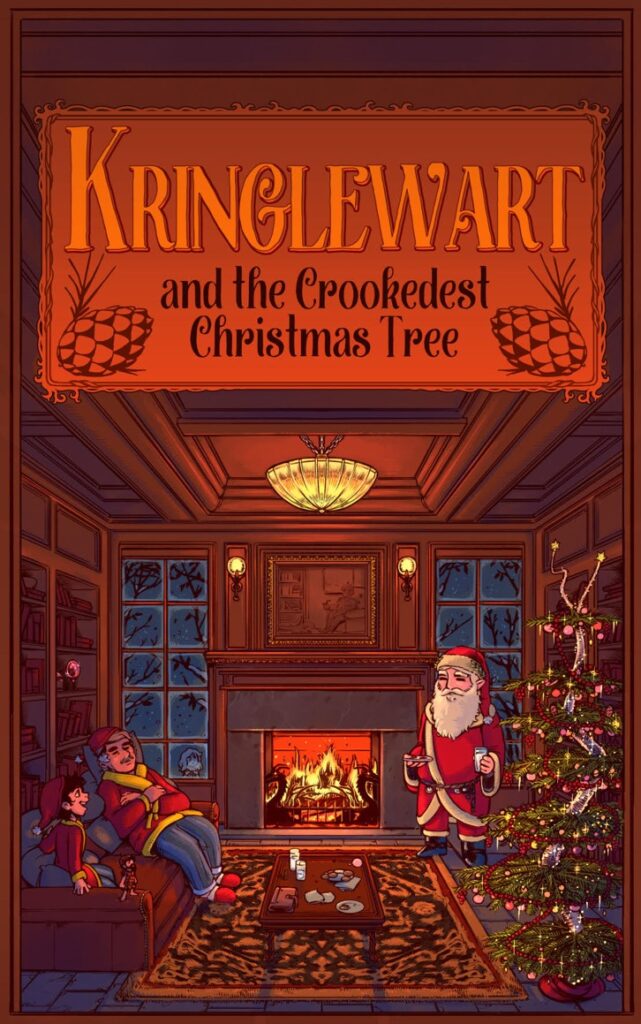
Kringlewart and the Crookedest Christmas Tree is a whimsical Christmas fable with a strong ecological heart. Narrated by Kringlewart, a tiny tree elf born in Germany in 1634, the story challenges the tradition of cutting down living trees for brief human celebration. Unlike other Christmas tree elves, who pride themselves on shaping perfect, symmetrical firs for harvest, Kringlewart sees each tree as a living being with its own dignity, purpose, and place in the wider web of nature.
From an early age, Kringlewart rebels against the idea that trees should be treated as crops or ornaments. He rescues weak, unwanted seedlings from Christmas tree farms and transplants them into forests, where they can grow into mature trees that shelter birds, insects, animals, and elves. His crooked trees become acts of resistance against human habits of ownership, consumption, and waste.
The emotional center of the story is Esmeralda, Kringlewart’s beloved crooked fir, who is cut down and sold as a Christmas tree. When Kringlewart follows her to London, he meets Harry, an orphaned boy who sees beauty in Esmeralda’s imperfections. Through encounters with Harry, Charles, Reinen Snow, and Father Christmas, Kringlewart begins to imagine a transformed holiday: one rooted less in consumption and more in reverence, replanting, generosity, and giving back to the Earth.
The tale blends folklore, grief, forgiveness, and environmental conscience. Its central message is that traditions can evolve. Christmas need not depend on destroying nature; it can become a celebration of renewal, stewardship, and the living world.